Friday, May 19, 2006

Friday Whitey


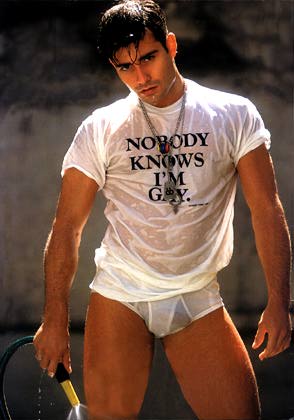
My Roommate & His Underwear

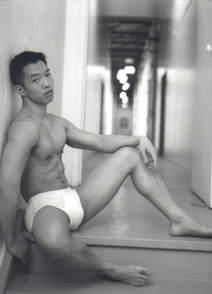
A close friend of mine used to visit at my place all the time. In fact it seemed like I had gained another brother as he was there so often. There was something about his feet that attracted me to him and as well he had the most dynamite bubble butt that I used to pop boners all the time. I used to wonder what kind of underwear he wore as I knew that his mom had bought everything for him and he was too modest to walk into a store and actually buy them for himself. He didn't think that it was his duty to do those things.

Anyway he bought this place and asked me if I would like to be his room mate as it had a second bedroom and we always seemed to be hanging together that it would seem natural that we would share a place. Of course I said yes as this would be my first time living away from home and with my jerk off dream buddy living a few feet away how could I possibly say no?

Once we were moved in and settled I set about to find out what kinds of underwear he wore. He was quite the modest person and it seemed like he would be scared to be seen by me walking around in his briefs. Of course I took every opportunity to walk around in mine and figured that if he could see how natural it seemed for me to do it that he would also.

The best day of the week was Laundry day which was always on Saturdays, as I was off and he had to work. Another area that his Mom had catered to him and he didn't know how to do any of it. Well I would remind him that tomorrow was wash day and that if he had anything he wanted washed to put it on the floor in front of the machines and I would wash them with mine.

By the time that I had gotten up he had already left for work so I had the place to myself. I used to take his briefs and inhale his musk and pop the biggest boner that I would just have to put them on to see how they fit me. It got to the point that I would wear his briefs around the place for a bit first and get them all warmed up again before I would take them off and inhale them. Then when I couldn't control myself any longer I would jerk off and spray my load inside them then throw them in the washing machine.

I continued this little spectacle for about 4 years and then we moved in different directions and I never got the chance to see him in his underwear for a long time. Even those few times that I did he had changed the style of briefs he wore and was now wearing regular bikini briefs. He had finally out grown the "little boy" y front briefs.

To this day all he has to do is pull the back of his shorts away from his body and snap them against his back and I pop a boner and think of how I would love to just jump right in them with him. I never got the chance to "play" with him but it's a fantasy that I still hold onto that one day it might happen. God, what I wouldn't give to see what he wears now.


Hot Underwear Stories or Encounters


Thursday, May 18, 2006

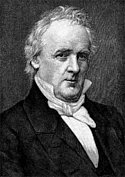
Vintage Thursday Buchanan, James (1791-1868)

A Gay President ?

James Buchanan, the only "bachelor president" of the United States, had a long intimate relationship with William R. King, the only unmarried vice-president.

Early Life

Buchanan was the second of eleven children in a devout Presbyterian family of Scots-Irish origin. He was born on April 23, 1791 at the family farm near Mercersburg in southern central Pennsylvania.
He graduated from Dickinson College in the nearby town of Carlisle in 1809. After reading law for three years he was admitted to the bar. A fine orator with excellent legal knowledge, Buchanan quickly achieved great success as an attorney.

In 1819, he became engaged to Anne Coleman, the daughter of an extremely wealthy businessman from Lancaster, Pennsylvania. A few weeks later, however, Coleman broke the engagement, complaining that Buchanan "did not treat her with that affection she expected from the man she would marry." Coleman died suddenly shortly thereafter.


Political Career

Buchanan began his political career in 1814, when he became a member of the Pennsylvania House of Representatives. He moved on to the United States House of Representatives in 1821. After ten years of government service he considered returning to the private practice of law, but when President Andrew Jackson offered him the post of minister to Russia, he departed for St. Petersburg.

Buchanan returned to the United States in 1833 and was elected to the Senate from Pennsylvania. Soon after joining that body he met Senator William Rufus De Vane King of Alabama, who became his close companion for the next two decades.

Buchanan remained in the Senate until 1845, when President James Polk appointed him Secretary of State. At the close of the administration in 1849 he retired to Wheatland, his country estate near Lancaster.

Still a prominent and popular figure in the Democratic party, Buchanan received strong consideration for the presidential nomination in 1852. After forty ballots at the party convention, no winner had emerged from a field of candidates that also included Governor Lewis Cass of Michigan and Senator Stephen Douglas of Illinois. The convention eventually chose Franklin Pierce, a former senator from New Hampshire and brigadier general in the Mexican War, as its presidential nominee. To balance the ticket and to placate Buchanan and his forces, King was chosen as the vice-presidential candidate.

Buchanan campaigned vigorously for the ticket, and in a speech in October 1852 confidently predicted that Pierce and King would be elected "should their lives be spared"--a seemingly curious turn of phrase. Buchanan was well aware, however, that King was seriously ill with tuberculosis.

In hopes that a balmier climate might restore his health, King went to Cuba but continued to decline. Too frail to return to Washington for the inauguration in March 1853, he became the only vice-president sworn into office in a foreign country. Realizing that his condition was deteriorating rapidly, King sailed for Alabama, where he died on April 18, only a week after his return.

Pierce named Buchanan minister to Great Britain, where he spent most of the next three years. Shortly after his return to the United States, the Democratic party chose him as their candidate for president in 1856.


Buchanan's Presidency

Buchanan's administration (1857-1861) came at a time when the country was deeply divided over the issue of slavery. Buchanan attempted to effect compromises to appease both sides in order to avoid the secession of the Southern states.

However, with the election of Abraham Lincoln as President in 1860, Buchanan's attempts to prevent the secession of the Southern states proved unsuccessful.

At the conclusion of his term Buchanan retired to Wheatland, where he died on June 1, 1868.


Buchanan's Relationships

Of the two significant affectionate relationships in Buchanan's life, one--his brief affair with Anne Coleman--has been romanticized and the other--his two-decade long liaison with William Rufus De Vane King--all but obliterated.

The episode of Buchanan and Anne Coleman has been presented by some as a tragic love story: the handsome young lawyer woos and wins the beautiful heiress, but due to a misunderstanding she breaks the engagement, then suddenly dies before the lovers' quarrel can be made up, leaving the young man so devastated that he forswears marriage forever.

The romance appears in actuality to have been rather less than completely idyllic. Although Buchanan had become prosperous through his successful law practice, some in Coleman's circle suspected that he was more interested in her fortune than in the lady herself, and Coleman seems to have found him less attentive than she wished. In a letter of condolence to Coleman's father, however, Buchanan called his former fiancée "the only earthly object of my affections."


Buchanan may never have seriously considered marriage again, but he alluded to it--albeit in a jesting tone--in an 1844 letter to a friend, Mrs. James J. Roosevelt. Declaring himself "solitary and alone," Buchanan wrote, "I . . . should not be astonished to find myself married to some old maid who can nurse me when I am sick, provide good dinners for me when I am well, and not expect from me any very ardent or romantic affection."


The reason for his temporarily solitary state was the departure of his longtime companion William King (who was carrying the letter to Mrs. Roosevelt) to serve as minister to France. On the eve of embarking for Europe, King wrote of his feelings on being apart from Buchanan: "I am selfish enough to hope you will not be able to procure an associate who will cause you to feel no regret at our separation. For myself, I shall feel lonely in the midst of Paris, for there I shall have no Friend with whom I can commune as with my own thoughts."

Tuesday, May 16, 2006

Tasty Tuesday Jamie Oliver

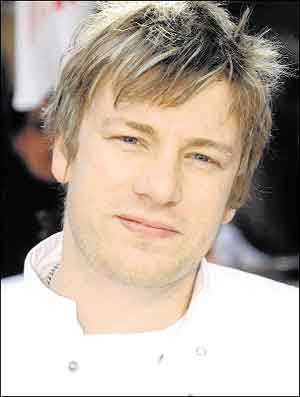
Full Name: Jamie Trevor Oliver
Birthdate: May 27, 1975
Birthplace: Clavering, Essex, England, UK
Spouse: Juliette (Jools) Norton
Children: Poppy Honey and Daisy Boo
Visit Jamie's web site here


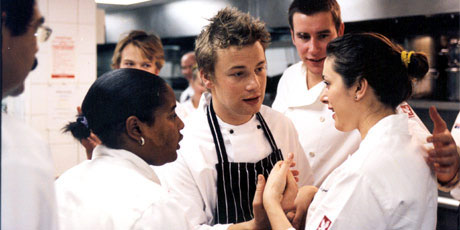
"Restaurants and cooking are in Jamie Oliver's blood, having grown up around the successful pub/restaurant owned and operated by his parents in Cambridge, England. At 8 years old, Jamie was peeling potatoes and podding peas with the rest of The Cricketers staff and by 11, he could julienne vegetables as fast as any of them. At 16, Jamie completed his formal training at Westminster Catering College.

A fresh face in the culinary world, Jamie Oliver began work at the critically acclaimed River Cafe in London for three years. After appearing on television as part of a documentary on the River Cafe, Jamie was called the next morning by five of the top production companies in England. Jamie went with Optomen Television to produce the first series of the enormously successful Naked Chef. He has since gone on to produce Oliver's Twist and multiple specials.


In addition to his TV shows in Britian and America, Jamie has writen the bestselling The Naked Chef (Hyperion), The Naked Chef Takes Off, Happy Days, and Jamie's Kitchen. He's also food editor for British GQ magazine, a columnist with the Saturday Times Magazine, and monthly food editor for Marie Claire magazine in the UK.

Now 27, Jamie continues his work as consultant chef at Monte's, an advisor for top British supermarket chain Sainsbury's, and design consultant for quality cook and tableware for Royal Worcester. In 2001, Jamie took his live cookery show on the road: His Happy Days Tour packed theatres in Cambridge, Bournemouth and London as well as in seven cities in Australia and New Zealand. Jamie's cooking is even in demand by the British government: In 1999, Jamie was invited to 10 Downing Street to prepare a lunch for the British Prime Minister, Tony Blair, who was entertaining the Italian Prime Minister.

Most recently Jamie opened a not-for-profit restaurant, Fifteen, with the goal of training young unemployeds to work in the kitchen and on the floor. The London restaurant has become a hit.

Jamie's passions are pasta and breadmaking. He still travels through London on motorbike and plays drums with his high school mates in the band Scarlet Division, whose sound Jamie likens to a mixture of "Catatonia and Texas with a harder edge."

Celebrity chef Jamie Oliver has been credited with getting the Government to increase funding for school meals - something that many parents have been trying to do for years.


The hottest young star of TV cookery programmes, Jamie Oliver has wowed all generations of food lovers with his fresh, no-nonsense cooking style and his inspiring recipes.

Jamie grew up surrounded by good food: his parents ran the Cricketers pub in Essex and, from the age of eight, he started cooking and helping the chefs.

The use of quality fresh produce at the pub gave Jamie a love of good ingredients. After an undistinguished school career, he decided he wanted to cook for a living and went on to study at Westminster Catering College. It was around this time that he met Jools and they started dating. After college, he travelled to France to learn more about his trade.


Jamie's apprenticeship to restaurant cooking came under some of the best chefs in London. To begin with, there was Antonio Carluccio at the Neal Street Restaurant, then he moved on to the River Café under Rose Gray and Ruth Rogers. The Italian influence on his cooking is strong, with its use of herbs and simple, full-flavoured recipes. It was while he was working at the River Café that he was spotted by a TV producer and his life changed.

The first series featuring Jamie cooking was the Naked Chef. Viewers were treated to a glimpse into his world, zipping about London on a scooter and hosting parties for all of his friends, all to a rock'n'roll soundtrack. The food was reassuringly hearty, but not too fiddly, and Jamie always seemed to have his hands full of fresh herbs and olive oil. It was an overnight success, attracting an audience that wouldn't normally watch food programmes. The book that accompanied the series became a bestseller and the young chef, always fully clothed, was catapulted into the limelight.


Boots made a booboo, showing an image of Jamie Oliver in the Boots Christmas Gift Guide - the catalogue is now being hastily withdrawn.
Oliver graces the cover of the calender, but some peoples imagination went haywire, and to them it looked like someone had crudely appended a penis onto the picture of the naked chef.
Alas, the offending item between Olivers legs is an innocent bag of fruit. It's when the image is scaled down things get bit fuzzy....

Fast on the heels of the first series came the Return of the Naked Chef. Again, it was packed full of the same stylish food and London partygoers, but we also saw more of Jamie's domestic side, at home with girlfriend Jools and cooking on a smaller scale. The second time around, viewers loved the show and the book, forcing Jamie into a whirlwind schedule of travelling around the world to promote the Naked Chef.

After taking some time off to marry Jools, Jamie worked on his third series, Happy Days with the Naked Chef. The series and book had a slightly different feel as Jamie had taken into account what viewers wanted. There were different moods and ideas in the last outing, but the cheeky grin and wisecracks were still there.

In 2002, Jamie embarked on his most ambitious project yet. He took 15 under-privileged youngsters who had never been anywhere near a restaurant kitchen and turned (most of) them into professional chefs to work under him at his new restaurant Fifteen in London. The restaurant and its accompanying TV series have both been huge successes. Jamie now plans to repeat the formula elsewhere in the UK and in Sydney and New York.

Before leaving to set up Fifteen, Jamie was consultant chef at Monte's in Knightsbridge, working with his close friend Ben O'Donoghue, star of BBC Two's The Best. He has written for The Times, as well as for GQ and Marie Claire magazines. He currently writes for Delicious magazine in the UK and Australia.


Jamie also started, and continues to be involved with, the charity Cheeky Chops, which provides training and mentoring for disadvantaged young people - allowing them to follow their dreams and become chefs. Jamie lives in London with his wife, Jools and their daughters, Poppy and Daisy.

Monday, May 15, 2006

Gay Prison Pen Pals


Having spend no time in prison I don't really know the mentality of the prisoner mind or the criminal mind for that matter. I stumbled upon a web site about gay prisoners looking for pen pals and it quite frankly horrified me who would write these people murderers, rapists, arsonists and worse.
The site claims they are gay and looking for pen pals and some. What are they really looking for cash, items or are they just bored. I don't know perhaps they are sincere perhaps not.
I suppose if you have a big heart and have some free time you can give it a try I quite frankly would have a problem with giving my address to one of these guys.
I can see it now knock knock its your prison pen pal can I come in.
Below is a sample of a prisoner looking for love ? .
You can visit the web site here and see even more scary prisoners if you like.


Jason Hamilton #130083
Kentucky State Penitentiary
P.O. Box 128
Eddyville, KY., 42038

See him also at the Kentucky DOC

CRIMES: Murder, 1st degree promoting contraband
DOB: 4-9-79
HEIGHT: 5-foot-10 WEIGHT: 150 EYES: Blue HAIR: Blond
RACE: White
TATTOOS: Yes
HOMETOWN: Covington, KY
SEEKING: Gay lover
HIV n/a
ZODIAC SIGN: n/a
MUSIC INTEREST: n/a
OTHER INTEREST: n/a

COMMENTARY: I am looking for someone to connect with and possibly build a relationship. What I would like is a
person who is honest, kind and caring and who will love me for "me" as I will for them.

Now on with the pics with the theme of the story in mind.


Sunday, May 14, 2006

Speedo Sunday

Greg Louganis hasn't competed for gold in nearly 18 years, but the former Olympian is still a main draw at the Speedo USA Diving Grand Prix.


It has been nearly 18 years since Greg Louganis, a former diver for the University of Miami, won double gold in the 1988 Seoul Games.

How time flies. Louganis is 46 years old now.

''And I've earned every gray hair,'' he said.

Louganis, the American diving icon and four-time Olympic gold medalist, is in Fort Lauderdale this weekend to promote the 2006 Speedo USA Diving Grand Prix at the Fort Lauderdale Aquatic Complex, an international competition featuring some of the world's best divers.

He will sign autographs an hour before today's 12:30 p.m. opening ceremonies. The Grand Prix began Thursday and ends Sunday.

It was at Seoul where Louganis earned gold in the men's 3-meter springboard despite hitting his head on the board during the competition's preliminary round.

''It's hard to forget when everyone still asks you questions about it,'' said Louganis, who also won Seoul gold in the 10-meter platform.

``I was so embarrassed that I didn't want to get out of the pool.''


ON HIS WAY

Louganis was poolside Friday for the men's 10-meter platform semifinals to watch rising star Thomas Finchum, a 16-year-old American. Finchum was the 2005 national champion in the platform.

''Thomas is on his way,'' Louganis said. ``He's gone through a big growing spurt, but he's got a good head on his shoulders.''

Finchum placed seventh in Thursday's platform semifinals, leaving him out of Sunday's final. Although Finchum failed to qualify, the U.S. will not go without representation. David Boudia earned a spot in the finals. Christina Loukas advanced to Sunday's final in the women's 3-meter.

In Friday's feature event, China's Li Ting and Guo Jingjing won the women's synchronized 3-meter springboard final. Li and Guo won synchro gold at the 2004 Athens Olympics.

The women's platform final begins at 1 p.m. today, followed by the men's 3-meter springboard final and the women's synchronized platform final.

Louganis, who in 1994 disclosed that he had been HIV-positive since early 1988, said that he was recently hospitalized for a week because of a staph infection in his left leg.

''The leg was a bit of a setback,'' Louganis said. ``I just overextended myself.''


A NEW CAREER

He has pursued an acting career since his diving retirement, and recently completed work on an independent film.

''I played a [swimming] coach,'' Louganis said. ``It was so fun.

``I was really a jerk.''

The part was out of character for Louganis, whose positive attitude and charismatic personality have been highlights at this weekend's Grand Prix.

He's still sponsored by Speedo, a company that remained loyal to him when other corporate sponsors severed ties after his disclosure.

When he's not acting, which Louganis admits doesn't happen as often as he would like (``I don't have an agent but that doesn't mean I don't want one''), the former Olympian devotes most of his time to AIDS awareness, mentoring young divers, animal rescue and his dogs. Louganis owns two Jack Russell terriers and a border collie who compete in national dog-agility contests.

He's also a promoter for the Gay Games, which will be held this summer in Chicago.

''It's an event to instill self-esteem in the gay community through sport,'' Louganis said. ``And it's open to anyone.''


Greg Louganis Home Page
USA DIVING PAGE

Saturday, May 13, 2006

Songs where the primary topic is homosexuality


# "101% Man" by The Beautiful South (2003)
# "Adam and Steve" by Spacehog
# "Ain't Nobody Straight In L.A." by The Miracles
# "Andy, You're A Star" by The Killers
# "Animal Nitrate" by Suede
# "All The Things She Said" by t.A.T.u
# "An Honest Mistake" by The Bravery
# "Are You a Boy or Are You a Girl?" by Jayne County (1986)
# "Are You Man Enough to Be a Woman" by Jayne County
# "Army Song" by Spouse


# "Art Fag" by Anal Cunt
# "Bisexual Girl" by Coyote Shivers (1996)
# "Bobby Brown" by Frank Zappa
# "Born This Way" by Carl Bean (1977), with the chorus including the lines "I'm happy, I'm carefree, and I'm gay, I was born this way"
# "Breakdance Hunx" (remix) by Kids on TV featuring Boy George
# "Bulldagger Swagger" by Phranc (1995)
# "Coming Clean" by Green Day
# "Cowboys Are Frequently, Secretly Fond of Each Other" by Ned Sublette (1981)
# "Cruising the Streets" by Boys Town Gang (1981)
# "Drag" by King Adora
# "Drive" by Melissa Ferrick
# "Eating Amy Out (Of House and Home)" by The Need (2001)
# "Eddie's First Wife" by Gretchen Peters
# "Every Man Has a Man Who Loves Him" & "Every Woman Has a Woman Who Loves Her" special 2004 recordings by Yoko Ono of her earlier song "Every Man Has a Woman Who Loves Him"
# "Fagetarian and Dyke" by Team Dresch (1994)
# "Femme Bitch Top" by Tribe 8 (1995)
# "Femme in a Black Leather Jacket" by Pansy Division


# "Forbidden Love" by The Apostles
# "Fuck Anita Bryant" by David Allan Coe
# "G.A.Y." by Geri Halliwell
# "Gay Messiah" (2005) and "April Fools" by Rufus Wainwright
# "Gender Is As Gender Does" by God Is My Co-Pilot (1992)
# "Gertrude Stein" by Phranc
# "Girl-O-Matic" by Three Dollar Bill (1998)
# "Glad to Be Gay" by the Tom Robinson Band
# "Green Carnations" by Noel Coward (1933) (wearing green carnations was a way of signalling to other gay men that one was gay as well)
# "Hand In Glove" by The Smiths
# "Hideaway" by Erasure (1987)
# "Homophobia" by Leaether Strip (2005)
# "Homophobia" by Victims Family
# "Homosapien" by Pete Shelley (1981)
# "Homosexuality" by Modern Rocketry
# "I Am What I Am" from the Broadway soundtrack "La Cage Aux Folles," also recorded by Gloria Gaynor
# "If I Were Gay" by Steven Lynch
# "I Kissed a Girl" by Jill Sobule (1995)


# "I'll be Your Girl for All Seasons" by Northern State (2005)
# "I Love Boys Hardcore" by Limp Wrist
# "I Spent My Last $10 (On Birth Control and Beer)" by Two Nice Girls
# "I Wanna be a Homosexual" by Screeching Weasel
# "I Want the One I Can't Have" by The Smiths (includes the line "and if you ever need self-validation, just meet me in the alley by the railway station.")
# "I Want You Hard" by Leaether Strip
# "I Wish I Was Queer (So I Could Get Chicks)" by The Bloodhound Gang (1996)
# "I Wish I Were a Fairy" (1940) by John Ryan
# "I'm Still Your Fag" by Broken Social Scene
# "Jesus Clone" by Nervous Gender (1981)
# Jet Boy, Jet Girl by Elton Motello
# "Jimmy got a little bit of Bitch in Him" by Funkadelic (1974)
# "Jonathan David" by Belle and Sebastian
# "Legendary Children" by Holly Johnson (1994)
# "Leviticus Faggot" by Me'shell Ndegeocello
# "Love is Love" by RuPaul
# "Malchik Gay" by t.A.T.u
# "Man Enough to Be a Woman" by Wayne County & the Electric Chairs (1978)
# "Man, I Feel Like a Woman" by Jayne County (2001)
# "Mann gegen Mann" by Rammstein
# "Meet the G That Killed Me" by Public Enemy (1990)
# "Menergy" by Patrick Cowley (who was one of the earliest victims of AIDS)
# "Michael" by Franz Ferdinand
# "Mississauga Goddam" by The Hidden Cameras (2004)
# "Mujer contra Mujer" by Mecano (1998). Originally in Spanish, it was later recorded also in French ("Une Femme avec une Femme"), English and Italian by Mecano themselves. Also covered by Fey.
# "Murder In Hollywood" by D.O.A.
# "Nancy Boy" by Placebo
# "Nelly Strut" by Sta-Prest
# "No Clause 28" by Boy George, a protest song against a proposed anti-gay British law
# "Not Gonna Get Us" by t.A.T.u
# "No Man's Woman" by Sinéad O'Connor
# "Ode" by Limp Wrist (2004)
# "Off-Duty Sailor" by The Dicks
# "Only Loved At Night" by The Raincoats
# "Outside" by George Michael
# "Piccadilly Palare" by Morrissey (1990)
# "Prove It On Me Blues" by Ma Rainey (1926)
# "Punk Rock Fag" by Best Revenge
# "Queer Disco Anthem" by God Is My Co-Pilot
# "Queer Enough For You?" by Mukilteo Fairies
# "Raspberry Swirl" by Tori Amos


# "Read My Lips" by Jimmy Somerville
# "Real Men" by Joe Jackson (1982)
# "Red" by Poundhound (1998)
# "Relax" by Frankie Goes to Hollywood (1983)
# "Retarded Drag Queen" by Three Dollar Bill
# "Rough Boys" by Pete Townshend
# "Saturday Night At The Bookstore" by The Dicks
# "Secret" by The Veronicas
# "Seeing Other People" by Belle and Sebastian
# "Sexuality" by Billy Bragg
# "She Has a Girlfriend Now" by Reel Big Fish
# "She's So Butch" by God Is My Co-Pilot (1993)
# "Singing for Our Lives" by Holly Near
# "Sissy Blues" by Ma Rainey (1926)
# "Sissy Man Blues" by Pinewood Tom (1935)
# "Smalltown Boy" (1983) by Bronski Beat
# "So Many Men, So Little Time" (1983) by Miquel Brown
# "Something Strange" by The Herd (featuring Peter Frampton (1968)
# "Space Is The Place" by Spacehog
# "Superdyke!" by Lesbians On Ecstasy (2004)
# "Take Your Mama" by Scissor Sisters
# "The Ballad of Cleo & Joe" by Cyndi Lauper, which is about drag queens (1995)
# "The Boy Next Door" by Academy 23
# "The Drowners" by Suede
# "The Fairview Mall Story" by Fifth Column
# "The Garden" by PJ Harvey


# "The Girls Just Want To Be With The Girls" by Talking Heads
# "The Killing of Georgie (Part 1 and 2)" by Rod Stewart
# "The Queer Song" by Two Nice Girls
# "The Wedding Song" by Tret Fure
# "There's More to Love Than Boy Meets Girl" by Communards (1987)
# "This Charming Man" by The Smiths
# "This Love Is Not Wrong" and "So Said Kay" by The Field Mice (both about Lesbianism)
# "Tim I Wish You Were Born a Girl" by Of Montreal
# "Tickle Tune" by Sex Boots Dread (gay Rastas)
# "Tony" by Patty Griffin (Song about Suicide and Rejection)
# "Tutti Frutti" by Little Richard
# "What Makes a Man a Man" by Charles Aznavour
# "When a Man Is In Love With a Man" by Of Montreal
# "Why?" (1983) by Bronski Beat
# "You think you're a man" by Divine

Friday, May 12, 2006

Friday Whitey

Egyptians
The remnants of leather loincloths have been found with the remains of pre-historic man living 7,000 years ago. The loincloth is the simplest and probably the first undergarment worn by human beings, alone in warmer climates and covered by other garments in colder. The Egyptians of the 2nd millenium B.C. used fabric to form an undergarment over which they wore a skirt. In tombs of the pharaohs supplies for further use after death were buried with them.


Ancient Greeks
The Ancient Greeks dressed very simply with a 'chiton', an oblong of woolen cloth large enough to wrap around the body from the neck down to just above the knees. The side left open was fastened by a 'fibulae' ­ a pin or brooch. A girdle was worn round it and the 'chiton' could by pulled through it and worn high by those who were physically active and left long by the older gentlemen. Over this was worn the 'himation', an outer cloak. Slaves wore loincloths. However, the ancient Greeks did not wear underwear.


Middle Ages
Around the 13th century, pull-on underpants were invented and underwear became an important garment. The loincloth was replaced by large, baggy drawers called 'braies', which were often made from linen and seem to be worn by men from all classes of society under their normal clothing. Knights wore 'braies' under several layers of clothing topped by their armor. The wearer stepped into them and then laced or tied them around the waist and legs at about mid-calf. We know what they look like from illuminations of hot field-workers dispensing with all their clothes other than their braies for modesty and coolness. Wealthier men often wore chausses as well, which only covered the legs.

In Europe underwear played an important role in shaping outerwear. Items for men developed during this time and included corsets, cod pieces, stockings, undershirts and drawers.


Renaissance
By the Renaissance, the 'chausses' became form fitting like modern hose, and the braies became shorter to accommodate longer styles of chausses. However, chausses and many braies designs were not intended to be covered up by other clothing, so they are not actually underwear in the strictest sense. Braies were usually fitted with a flap in the front that buttoned or tied closed. This codpiece allowed men to urinate without having to remove the braies completely. At first, the codpiece was entirely a practical matter of modesty. Men's hose were typically very snug on the legs and open at the crotch, with the genitalia simply hanging loose under the doublet. A shortening of the doublet resulted in often-exposed genitalia, so the codpiece came into being. As time passed, codpieces were shaped to emphasize the male genitalia and eventually often became padded and bizarrely shaped. Henry VIII of England began padding his own codpiece, which caused a spiraling trend of larger and larger codpieces that only ended by the end of the 16th Century. They also often doubled as pockets, handy carrying places for a variety of items.

The modern men's shirt appeared during this era, but it was originally an undergarment. Renaissance noblemen also adopted the doublet, a vest-like garment tied together in the front and worn under other clothing.


Victorian Times
In Victorian times men's undergarments were in two pieces and all undergarments were made by hand. Materials used were cotton through linen and even silk. In America, before the Civil War, from the waist down "drawers" were worn which were usually made of wool flannel, but could be of any fabric. The most common were knee length with a simple button overlap in front and a drawstring at the waist in the back. The preferred upper garment was a wool flannel shirt worn next to the skin.

The Industrial Revolution with the invention of water-powered spinning machines and the ¹cotton gin¹ made cotton fabrics widely available and saw the beginning of mass-produced underwear. For the first time, people began buying undergarments in stores rather than making them at home. The standard undergarment of this period for men, women, and children was the Œunion suit¹, which provided coverage from the wrists to the ankles. The union suits of the era were usually made of knitted material and included a drop flap in the back to ease visits to the toilet. Because the top and bottom were united as a one-piece garment it received the name Œunion suit¹. Hanes opened several mills producing 'union suits'. Originally made with ankle length legs and long sleeves, later versions were available in knee length versions with or without sleeves.

The name 'Long Johns', long skin-tight underpants, was actually first used for the long underwear issued to American soldiers during World War Two. The name is derived from the old boxing gear worn by John L. Sullivan, who was a boxer in the late 1880s, the height of his career being 1882-92.


In the 1930s, union suits went out of favor and boxers and briefs became the 'vogue'. The 1930s saw another major innovation, that is easy elastic waists replaced button, snap, and tie closures. At around this time companies began selling buttonless drawers fitted with an elastic waistband, which were the first true boxer shorts. The name is derived from the shorts worn by professional fighters. The word "underpants" also entered the dictionary.

'Jockey' began making briefs in 1930 but it was not until 1934 with the advent of 'Jockey' Y-vent briefs that the design of men¹s underwear made a leap forward. It was the first time an easy-to-use diagonal vent was applied to boxers and briefs. Today one can buy jockey shorts which are knit fabric, with access pouch or flap, usually at or near true waist, leg bands at tops of thighs. Traditional high and lox cut jockey shorts have vertical flaps or diagonal flaps. In 1936 ŒMunsingwear¹ developed the 'kangeroo pouch' underwear which used a horizontal vent.

During the Second World War there was a difficulty in obtaining underwear as the first priority were troops abroad. Also there was a shortage of rubber and metal, and button fasteners were again used. For the first time color was used for underwear; soldiers were issued with drab-olive briefs for safety, as white briefs were too conspicuous when being hung up to dry. The preferred undergarments of this period were knit briefs, broadcloth shorts with buttons, and the union suit. Designs incorporated French backs, that is a design with small tabs at the rear of the waistband, usually secured by buttons, for adjusting the size and fit at the waist, and tie-sides.

At war's end, Jockey and Hanes remained the industry leaders. Also at the end of the war a preshrinking process called Sanforization came to be used. Prior to this one had to buy underwear a size larger to allow for shrinkage in the wash.

After the Second World War underwear continued to change significantly helping create the shape and the look for the outer clothes we wear. In 1947 came the introduction of nylon tricot, as well as men's stretch briefs, and in 1950 the first T-shirts with nylon-reinforced neckbands to prevent sagging were introduced.

1950s
From the 1950s design in underwear became more innovative and exciting with the introduction of color and pattern. Underwear began to be a fashion statement. New fabrics were introduced such as rayon, Dacron and DuPont nylon. Nylon tricot briefs were made in a multitude of colors. By the 1960s boxer shorts were decorated with every type of 'fun' image and a bikini type underwear was introduced using animal prints. However, white cotton underwear was still the major seller.

New fabric technology continued to offer better comfort in men's underwear, particularly with the introduction of Lycra and Spandex. In the 1960s in Italy Peppino Gheduzzi realized the importance of elasticity in fabrics used in men's underwear to improve comfort (close - fitting - support). He proposed the idea to Du Pont and subsequently the first product in Lycra Cotton was realized. Spandex was created in the late 1950s and developed by Du Pont, but the first commercial production of Spandex fiber in the United States began in 1959. Underwear became smaller with far more variety designed for specific age groups and purposes.

1970s and 1980s
In the 1970s and 1980s the new 'designer' underwear producers as Calvin Klein, Sauvage, Ron Chereskin, Tommy Hilfiger, 2(x)ist, as well as Jockey, used 'sex' as the main selling point for major advertising campaigns. Briefs got briefer and great design, unusual fabrics, wonderful colors and combinations, and great variety of choice made for underwear becoming a 'fashion' item. Today you can get underwear for sports, casual, romance, figure enhancement, warmth (thermals), humor, and with dual purposes such as the inclusion of pockets. Also, like the women's designs, the newest and hottest styles are almost totally seamless.

Modern Trends
The modern sexualization of underwear has started one more curious trend: not wearing underwear at all. This practice is known in slang as freeballing (or freebuffing for females); going commando (a term popularized by the TV show ŒFriends)¹ is also used for both sexes. This trend only emphasizes how far underwear has come from its beginnings as a hygienic aide. When modern people bathe every day, underwear is not nearly as necessary, and with underwear as the final barrier to sex, not wearing it at all is a powerful turn-on for many people. Traditionally a kilt is worn without underpants.
Boxer Briefs: In the 1990s, retailers started selling boxer briefs, which take the longer shape of boxers but maintain the tightness of briefs. Though marketed as a new design, these are actually quite similar to the bottom half of the two-part union suits worn in the 1910s. Boxer style are at or near true waist, leg sections extending to thighs) . They can be woven boxers (traditional) or knit boxers (like traditional but with more fabric give) . Boxer briefs ere also knit and more form-fitting . Pouch boxer briefs have a pouch for genitals rather than access flap and athletic and bike-style boxers are generally skin-tight, usually with no access pouch or flap, like short tights

Manstouch

Thursday, May 11, 2006

In the News


A Canadian GLBT tour operator has launched a TV commercial promoting gay and lesbian marriage in Canada for Americans.
"We are very proud to announce the release of our first video commercial on same-sex weddings in Canada. Indeed, we have already organized celebrations in Montreal and Canada. Vancouver wedding packages will be available soon!", says Jean-Claude Guay, project manager of Outbyview.com.
Watch the commercial at http://www.outbyview.com/index.php?cPath=111


Pope Benedict XVI denounced gay and civil unions, saying marriage between people of the same sex is ``weak.''

``Only the foundation of complete and irrevocable love between man and woman is capable of forming the basis of a society that becomes the home of all men,'' Benedict told a convention of the John Paul II Pontifical Institute today. The pope said ``confusing marriage with other types of weak love'' should be avoided.

The 79-year-old Benedict has weighed in on issues such as gay unions, abortion pills and embryonic stem-cell research since his election as pontiff more than a year ago. Still, more than 71 percent of Italians are favorable to gay civil unions such as those allowed in the U.K., Spain, the Netherlands and Belgium, according to a January report by research group Eurispes.
While the 1929 Lateran Treaty outlines the separation of church and state in Italy, about 43 percent of Italians believe the pope has meddled excessively in politics, according to the Eurispes report, published Jan. 17. While Italians identify themselves ``culturally'' as Catholics, their beliefs contrast with church doctrine, according to the report, based on the research institute's Dec. 22-Jan. 5 interviews with 1,070 people.

``When the pope speaks of `weak love' regarding millions of men and women, it's not surprising anymore at the level of interference but at the much deeper level of a real lack of charity,'' said Daniele Capezzone, an official in the Radical Party, according to news agency Ansa.

Belgium, the Netherlands, Spain and Canada, don't distinguish between gay and heterosexual weddings, while the U.K. allows civil partnerships that aren't legal marriages. In the U.S., gay weddings or civil unions are only permitted in Massachusetts, Connecticut and Vermon

Virulent Chlamydia Detected Largely Among Gay Men in U.S.
An unusually virulent form of chlamydia has emerged in the United States, primarily among gay men, after an outbreak in Europe two years ago, federal researchers said Wednesday.

There are about 80 confirmed cases in the U.S., but infectious-disease experts fear the actual number is substantially larger because this form of chlamydia is difficult to diagnose and many physicians are not aware of its existence.

Officials are concerned because the disease, like many other sexually transmitted diseases, can accelerate the spread of HIV infections and perhaps enhance replication of HIV in people who are co-infected.

Lymphogranuloma venereum, or LGV, is caused by three strains of the bacterium Chlamydia trachomatis — strains that are different from those that cause regular chlamydia infections or eye diseases.

Symptoms include bleeding, inflammation of the rectum and colon, and abdominal cramping. Infection can be fatal if left untreated.

It can be cured with antibiotics such as doxycycline, but three weeks of treatment are required — substantially longer than what is required for common genital chlamydia.

The disease is most prevalent in parts of Asia, Africa and South America along the equator, but it made an unexpected appearance in Europe in 2004. The Netherlands, which normally had seen four or five cases per year, suddenly began to see two cases per week; other European countries reported similar experiences.

Since then, LGV has shown up in the United States and Canada, generally in cities with a high prevalence of other sexually transmitted diseases.

Dr. Preeti Pathela of the New York City Department of Health and Mental Hygiene said at a sexually transmitted diseases meeting in Florida that her laboratory had confirmed 31 cases of the disease in the last year, 30 of them in gay men.

The Centers for Disease Control and Prevention has confirmed 30 cases nationwide, all in gay men, and the San Francisco Department of Public Health about 20.

But those numbers are "undoubtedly widely underestimated," said Dr. Ron Ballard, branch chief of the CDC's sexually transmitted diseases laboratory. "Many cases are not suspected, and many of those suspected are not tested."

There is also no requirement for notification of authorities when cases are observed.

Testing has been a problem because it involves sequencing part of the genome of the bacterium, a task that requires several days and a sophisticated laboratory.

Because of the time needed for testing and the dangers that come with infection, Dr. John Douglas, director of the CDC's Division of STD Prevention, said physicians should "presumptively treat suspected cases" as though they had been confirmed.

Diagnosis may soon be easier because CDC technicians have developed a genetic test that takes only a few hours and can be done in most laboratories.

It is still experimental and is being used only at the CDC, Douglas said, but if the test is proved, it will be offered to other labs.

Vintage Thursday

Florida Orange Juice Boycott

The first glbtq boycott to receive considerable media attention took place in 1977 when Anita Bryant, a pop singer and former Miss Oklahoma then employed as a spokesperson for the Florida Citrus Commission, founded an organization called Save Our Children, which was dedicated not to the welfare of children but to the repeal of a Dade County, Florida ordinance that protected gay men and lesbians from discrimination in employment and housing.

The prospect of a boycott of Florida orange juice, the product Bryant endorsed in advertisements, drew a mixed reaction from people concerned with gay and lesbian rights. Some, lesbians in particular, were reluctant to undertake a campaign that could cost a woman her job when Bryant's actions had been in her role as a private citizen rather than in the course of her work for the Florida Citrus Commission. Others expressed fears that Bryant would be cast as a "holy Christian martyr," concern for farm workers, and doubts about the effectiveness of boycotts as a tactic. Some of these reservations were allayed when the Florida Citrus Commission specifically endorsed Bryant's campaign and announced their support for her.

Momentum for the boycott grew. San Francisco activist Harvey Milk, then a columnist for the Bay Area Reporter, called for support, comparing the action to the Boston Tea Party. The Alameda (California) County Democratic Central Committee encouraged "all Democrats" to take part in the boycott, citing "the Bryant forces' disregard for the separation of church and state." David Goodstein, the publisher of The Advocate, lent both editorial and considerable financial support to the campaign.

Organizations responded. The San Francisco Tavern Guild stopped using Florida orange juice, as did gay bars and restaurants throughout the country. The American Federation of Television and Radio Artists unanimously voted "to deny their services and talents to Bryant."

When put to a referendum, Dade County voters repealed the gay rights ordinance by a large majority, dealing a blow to the gay rights movement. Nevertheless, glbtq rights activists found cause for hope. Milk stated that because of Bryant "the entire nation finally opened up and talked about Gay people." Goodstein suggested she deserved a "Gay Unity Award" for bringing people together to fight for their civil rights.

Bryant's status as a controversial figure cost her professionally. Sponsorship offers dwindled, and she saw some eighty entertainment bookings canceled in a year. Both her professional and personal life were in a shambles by 1980, when she divorced--for which she was condemned by many of the same right-wing Christians who had applauded her campaign to abridge glbtq rights--and was fired by the Florida Citrus Commission.

Bryant returned to Oklahoma, remarried, and tried to resurrect her career. By 1997 she and her second husband had numerous liens against them for unpaid taxes and other debts, and they filed for bankruptcy. Their next venture, a theater in Pigeon Forge, Tennessee, was also unsuccessful. They filed for bankruptcy again in 2001.

In 1994 the Florida Citrus Commission hired another homophobic spokesperson, Rush Limbaugh. Joining glbtq rights groups in denouncing the choice were feminists, African Americans, and the state's governor, Lawton Chiles.

Dade County finally passed a new glbtq rights ordinance in 1998. A repeal effort by conservative Christians in 2002 failed.

One of Anita Bryant's "Save Our Children" television news conferences is zapped by a pie-wielding gay activist. A historic document of political strategy.